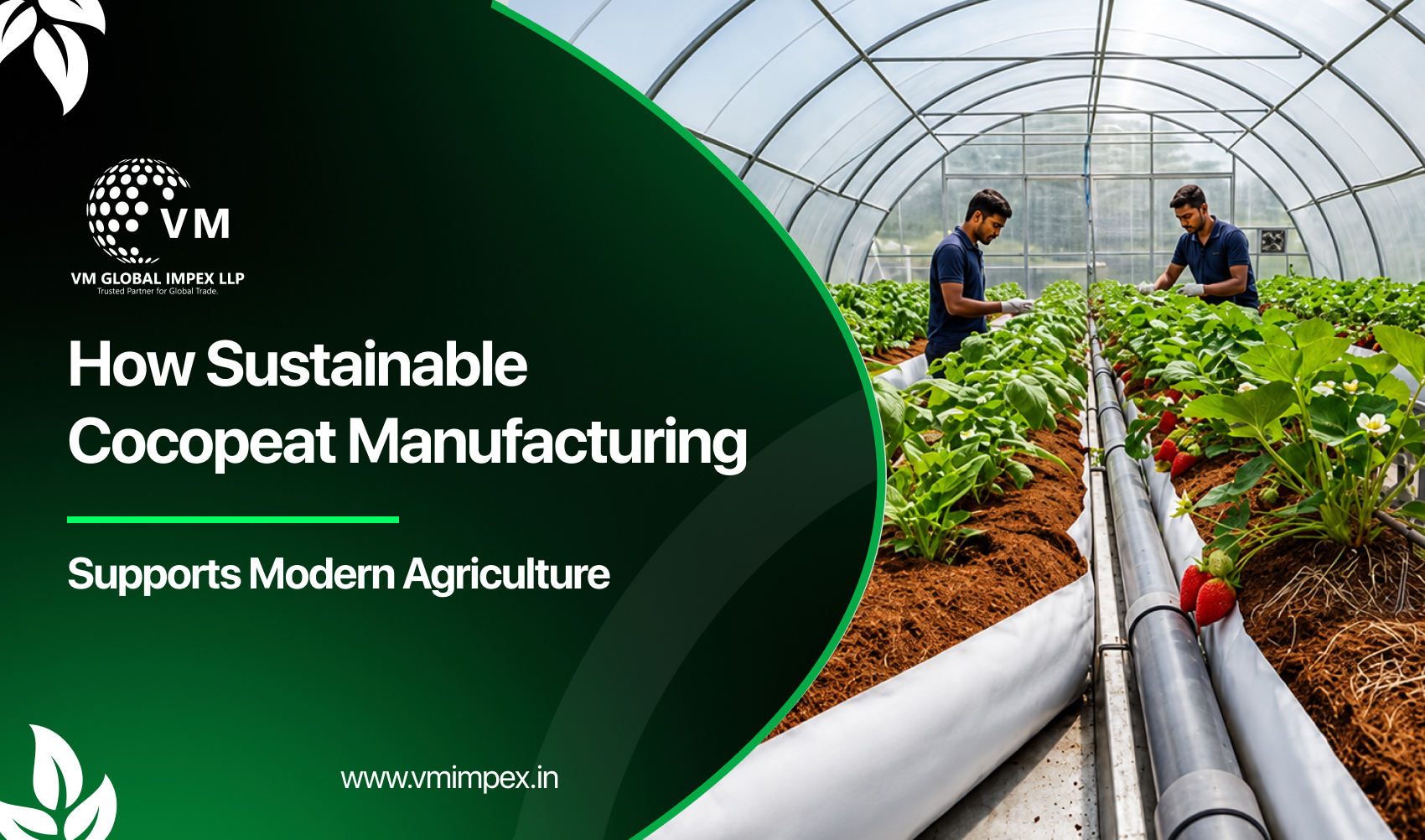
Introduction
Coconut husks used to be considered a waste product, dumped somewhere close to the processing plants since they had no apparent use. However, it was soon discovered that the fibrous material that comes from coconut husks can retain moisture and provide an excellent rooting medium for growing plants.
This material proved to be a great alternative to peat moss as it had multiple benefits over it, although it still requires proper processing to ensure the final product is up-to-standard. It may seem that sustainable cocopeat manufacturing is just a pretty word used by the companies to market their product, but in reality, it is a particular set of actions that should be taken during the production process.
The end product will be safe for crops, have a stable quality throughout different batches, and will be more sustainable compared to other growing mediums. This article will go over the testing process that cocopeat undergoes to ensure it complies with all the standards and why it is essential for the manufacturing companies and exporters to care about it.
Quality Testing During Manufacturing
A responsible cocopeat manufacturer in India will not test a sample and proceed to produce the rest, assuming that it will be the same. Testing procedures must be carried out at various stages of the production process. This is because
- EC testing will ascertain that washing and buffering have removed excess salts to acceptable levels for the intended use, say 0.8 mS/cm for general vegetable crops and 0.5 mS/cm for seedlings.
- pH testing ensures that the medium is in the ideal range of 5.5 – 6.8 to avoid tying up nutrients for any subsequent fertilizer program.
- Moisture testing ensures that the final product has a moisture content of 12 – 18% which is ideal for storage and shipping.
- Expansion testing makes sure that the product when rehydrated has expanded to five to seven times its compressed volume as a measure of fibre, drying and compression.
Sustainability Benefits of Cocopeat
Waste Utilisation
The production of cocopeat makes economical use of a waste product which previously had limited alternative applications other than being burnt or dumped back at the point of origin, usually a coconut processing factory. One tonne of coconut husk suitable for conversion into cocopeat represents one tonne of waste material saved from being burnt or dumped and hence a lowering of disposal costs to the coconut processor.
Reduced Peat Moss Dependency
Conventional peat moss comes from peat bogs which occur naturally but take in the region of 600 years to generate a workable resource. This resource is currently being rapidly depleted due to horticultural demand. Cocopeat provides an alternative resource which has broadly similar moisture retention and aeration properties to peat moss, but does not require the destruction of a unique eco-system in order to be farmed. This has led to the adoption of coco-based growing media by numerous growers in Europe and North America over the last two decades.
Renewable Resource
Coconut trees produce a supply of husks suitable for processing into cocopeat every year, whereas peat bogs represent a finite resource, requiring hundreds of years in order to generate new growth suitable for harvesting. As long as coconut processing continues at the current rate, a supply of raw material suitable for turning into cocopeat will be readily available.
Water Saving Properties
The ability of cocopeat to store water means that greenhouse growers can lengthen the intervals between watering without subjecting their crops to undue stress. This results in a reduction in the total amount of water required to raise such crops, an important consideration for growers in dry climates for whom water may be a scarce and expensive resource.
Reduction In Water Usage During Manufacture
In addition to reduced water requirements at the grower level, progressive manufacturers of cocopeat are adopting closed-loop water recycling systems for processing the raw coconut husks into the end product. This dramatically reduces the amount of water utilised per tonne of processed cocopeat. Some cocopeat manufacturers in India also utilise offcuts and sawdust from the production process as a biomass fuel source for drying processes, representing another significant reduction in environmental impact.
Why Sustainable Manufacturing Matters
For Growers
Consistent EC, pH, expansion ratios achieved through a rigorous manufacturing process as opposed to superficial shortcuts benefit those who make their living growing plants, as an entire crop of grow bags is far less prone to error than dozens of individual growers attempting the same task with less precision.
For Cocopeat Exporters
Those selling their goods overseas benefit from a reliable process that produces verifiable documentation, as most serious buyers are going to request specific batch test results, and less scrupulous exporters who attempt to cut corners by providing a generalized specification sheet for all of their products will find it difficult to maintain long-term relationships with buyers.
For the Environment
On a grand scale, this has the added benefit of reducing the strain on natural ecosystems, as the creation of these grow bags utilize existing plant material rather than extracting from slow-growing sources such as peat bogs; in effect, a more responsibly-minded manufacturing process creates a superior end product for the consumer.
Buyer Checklist
Before buying in bulk, from the best cocopeat suppliers in India, clarify the following points:
- Ask whether husks are aged before processing, not rushed to market
- Request for EC and pH reports on your batch.
- Moisture content should be between 12-18%
- Ask for an expansion test before buying a full container.
- Ask whether the manufacturer recycles water used in the process or uses husks as a fuel source.
- Compare prices between grow bags of coco peat and bricks wholesale from a few domestic cocopeat wholesale suppliers in India before finalizing.
- Make sure to ask about export documentation if you intend to import from outside the country.
When shopping around among cocopeat manufacturers in India, remember that there is a broad range of production standards, and asking specific production-related questions, beyond general specifications, is often an effective way to identify trustworthy suppliers who will consistently deliver high-quality material over time.
Moreover, bear in mind that the quality of coconut coir may vary significantly depending on the region. Thus, when choosing between different cocopeat manufacturers in Tamil Nadu and those located in other parts of the country, note that the former tend to have better access to fresh coconut husks, which directly impact the quality and uniformity of the final product. As such, it is advisable to narrow the search to a few cocopeat brick manufacturers in India and request samples in order to assess quality consistency before making a final purchase decision
Conclusion
Cocopeat manufacturing in India has evolved from the simple process of drying out coconut husks. From ageing and washing to buffering and compression, each stage is a carefully engineered step in the transformation of a by-product into a reliable growing medium for greenhouse growers, hydroponic farmers, and nurseries who demand consistent quality from every bag. The emphasis on sustainability is not a gimmick but a natural outcome of a manufacturing process that values precision and control. Recycled water, reduced peat usage, and waste repurposing are all part of the production lifecycle.
For buyers seeking to compare cocopeat manufacturers in India, the production process is an enlightening insight into the capabilities of any given supplier. VM Global Impex has invested in responsible manufacturing practices to produce high-quality coco peat for the global market, so it is important for buyers to remember that sustainability and performance go hand in hand when choosing a reliable supplier.
Leave a Reply