Introduction
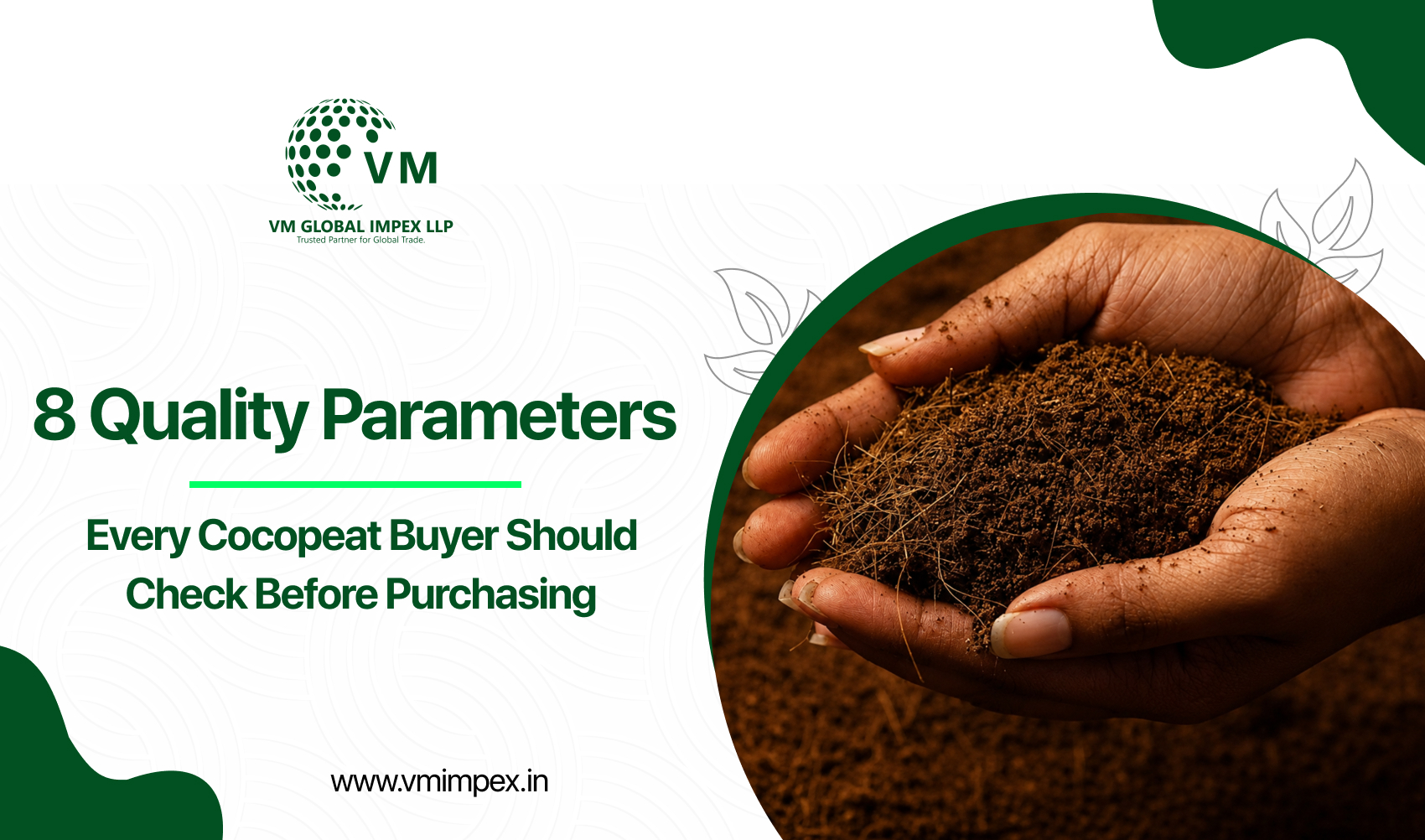
Cocopeat may seem identical: this huge, brownish, fibrous “block” is mostly similar to another one on the pallet beside it. However, one of these blocks will produce high-quality plugs with strong roots, while the other is destined to ruin your seedlings with salt damage, poor germination, waterlogging, and a few weeks of frustration.
In this article, we’ll explain why it is so critically important to request laboratory analysis and certification of the coco peat before buying it in bulk and what tests must be done.
EC Level
A high EC in cocopeat can lead to a high salt concentration around the roots, which can have a negative impact on germination, as well as cause tip burn and reduce the growth potential of vegetables. A cocopeat block processed by washing and buffering should contain less than 0.8 mS/cm on average for growing vegetables and should be closer to 0.5 mS/cm or less for seedlings.
For instance, if a grower grows vegetable seedlings in a hot climate, he may face problems of tip burn that will be noticeable two or three weeks after sowing and it will already be too late to avoid them.
pH Level
Cocopeat should have a pH level that varies between 5.5 and 6.8. Any deviation from these values from either side prevents the plant from absorbing essential minerals, regardless of the fertilizer solutions used in the process. This is because the ionization of nutrients in the growing medium relies on pH levels.
It should also be noted that coco fiber has a natural tendency of remaining neutral. However, it may also happen that during the storing and manufacturing process, the pH of coco peat may increase beyond acceptable limits. This is why blueberry growers ask for peat that has been tested and processed to a slightly acidic range of the normal limits.
Moisture Content
The amount of moisture in relation to the product’s weight impacts both the storage time and price, since the majority of cocopeat is sold by weight. A block with an increased water content will have a higher weight at the time of sale, but will also be more susceptible to mold and fungi development during transit and storage.
The optimal moisture indication for compressed cocopeat blocks should be between 12 and 18%. If you are purchasing the product in container sizes, this value should not exceed the mentioned threshold, since the longer it takes to ship the material to your location, the higher the risk of quality degradation becomes.
Expansion Ratio
When compressed, the cocopeat block expands in water for 5-7 times its initial volume. For the grower, this is an essential parameter that helps estimate how the mix will perform for particular purposes. It is directly linked to the quality of processing, as an incorrectly dried or low-fibre block will show low expansion ratios.
A grower who wants to purchase a certain number of grow bags for their expanded greenhouse needs this parameter to be consistent for the necessary calculations. If the bags contain less substrate than specified, this will impact the entire planting schedule.
Fibre Content
Cocopeat consists of two types of particles: fine dust called coco pith and coarse fibre. The ratio between the two determines the air content, water retention and overall structure of the block throughout the crop cycle.
A mix with too much coco pith and not enough fibre will lead to a breakdown of the block over time, reducing the air content in the root zone. On the other hand, too much fibre and not enough pith leads to poor moisture retention and, consequently, lower yields. Commercial grades of cocopeat usually contain 70% pith and 30% fibre. However, this may vary depending on the application.
Particle Size
The size of the particles in the mix determines whether the final growing medium will be on the finer or coarser side once expanded.
Seed starting mixes usually have a finer consistency for better root development, while grow bags for vegetable crops can have a coarser blend to improve aeration. A nursery growing chilli and tomato seedlings would typically buy a different grade of cocopeat than a greenhouse growing cucumber plants in grow bags. The two operations have different requirements for the consistency of the medium.
Water Holding Capacity
Water holding capacity refers to how much water the medium retains against gravity after it’s been thoroughly soaked and allowed to drain. This is different from moisture content, which is about the water already present in an unused block.
Good cocopeat holds water efficiently without becoming waterlogged, which reduces irrigation frequency without starving roots of oxygen. Growers in regions with inconsistent water access, or those managing large greenhouse blocks with limited irrigation labour, tend to prioritise this parameter heavily when selecting a supplier.
Compression Quality
Compression is a critical parameter that determines handling and transportation cost, shelf life, and even the uniformity of the block’s ability to rehydrate. Blocks that are properly compressed tend to resist pressure during transit and retain their shape. When rehydrating, they also have an even surface, as opposed to uneven swelling from one side.
In contrast, badly compressed blocks may crumble under pressure and swell unevenly. They may also absorb moisture from the air unevenly, resulting in different EC and moisture levels in different blocks. This is especially important to consider in the context of exporting cocopeat blocks from India. The blocks may stay on the ship for weeks before arriving at their destination.
Why Testing Matters
Lab Reports
A lab report turns a marketing assertion into an objective reality. The most reliable coco peat suppliers in India conduct EC, pH, and moisture tests several times during production, not once before packaging. Request a report that specifically identifies the batch you are buying, rather than a generic one from all batches.
International Standards
Some buyers seeking to use coco peat in international markets might need to meet foreign horticultural standards, such as those concerning prohibited substances and heavy metals. This primarily concerns hydroponic growers in Europe and North America, who are particularly protective about what goes into their food supply.
Export Certifications
Export certifications, including phytosanitary papers, are a must for buyers who want to avoid legal and logistical complications. A single misstep in the certification process can result in an entire shipment being quarantined at the destination port.
Buyer Checklist
Before finalizing an order with a cocopeat manufacturer you found online to be selling coco peat, make sure that they can provide you with these:
- Batch specific EC and pH lab reports
- Moisture content between 12-18%
- Proven expansion rate of 5-7X
- Desirable fiber to pith ratio according to the crop you are growing
- Required particle size for seedlings or for mature plants
- Water holding capacity (and not just a claimed value)
- Proven compression strength (through an actual order )
- Export documents and certifications in place.
While comparing cocopeat grow bags price and cocopeat bricks wholesale rates quoted by different cocopeat wholesale suppliers in India, you must not forget that price is only one component if you can get reliable test data to support your requirement.
Regional Sourcing Considerations
India continues to maintain its status as one of the largest producers of processed coco peat in the world, mostly due to the abundance of coconut plantations in Tamil Nadu and Kerala. However, when comparing cocopeat manufacturers in India, buyers should be aware that they are likely to encounter both small-scale family-run businesses and large-scale production facilities, which may differ significantly.
In most cases, larger cocopeat exporters and manufacturers that specialize in selling their goods abroad are more likely to have their laboratory reports available or even provide batch-specific tests upon request, while smaller processors might only analyze their goods periodically or even rely on the results from a single initial batch.
Therefore, if a customer is interested in purchasing coir grow bags or compressed blocks of peat moss in large volumes, it is essential to ask the representative of a particular cocopeat manufacturer in India whether they perform laboratory tests for every batch of goods or only analyze samples periodically. This information alone can help narrow down the choice between different suppliers, as it indicates how likely the quality of the material is to remain consistent from shipment to shipment.
Lastly, when searching for potential cocopeat manufacturers in Tamil Nadu, Kerala, or elsewhere in India, it may be helpful to request a comparison of laboratory results from several suppliers rather than relying solely on the specifications provided by them or using price comparisons as the sole criteria for selection.
Conclusion
The quality of the cocopeat cannot be determined solely by the bag on which it is sold. Factors such as EC, pH, moisture, expansion ratio, fibre, particle size, water-holding capacity, and the degree of compression all affect the performance characteristics of the substrate in terms of weeks after planting.
Any deviation of this data may increase the risk of failure, thus shifting responsibility to the buyer. It is therefore essential for informed buyers to request relevant lab tests and certification. This reduces production risks substantially and improves the likelihood of long-term supply relationships.
VM Global Impex conducts all necessary tests for these characteristics for every dispatched consignment as a standard procedure. Make sure your supplier adopts the same quality control measures.
Leave a Reply