Tag: coir peat exporters

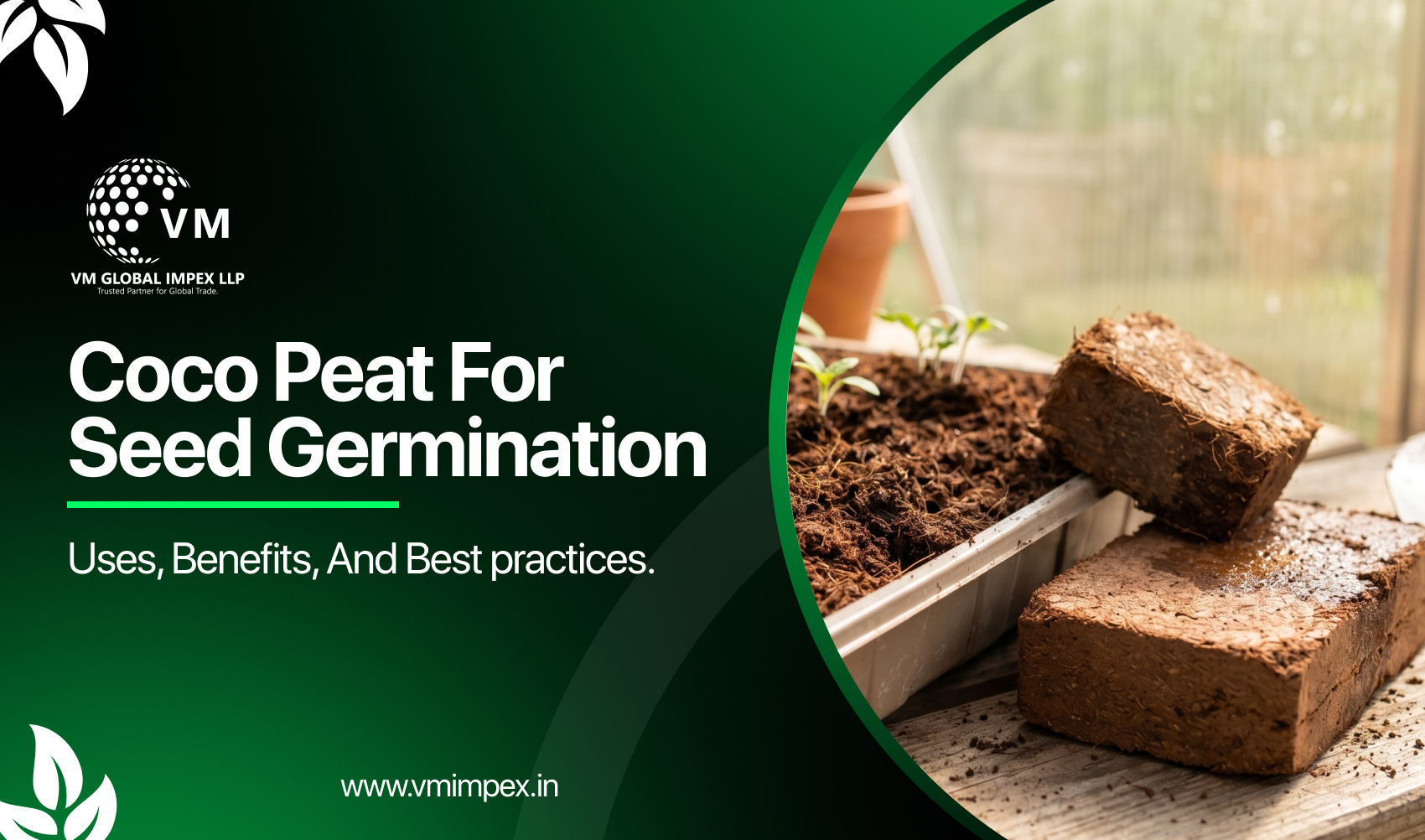
  • Coco Peat for Seed Germination: Uses, Benefits, and Best Practices

    Coco Peat for Seed Germination: Uses, Benefits, and Best Practices

    Introduction

    Gardening has a way of bringing people together across all ages. A child pressing a seed into soil for the first time and an elder quietly deadheading flowers at dusk are both doing the same thing — finding joy in watching something grow. It is a simple habit that asks for patience, attention, and a little bit of daily care.

    Yet for all that effort, seeds do not always cooperate. Some sit in the soil for weeks without showing any sign of life. Others sprout briefly and then collapse. You water carefully, you wait, and still nothing. It is frustrating, especially when you have done everything by the book.

    The good news is that poor germination usually has a reason behind it. Find that reason, and the fix becomes much easier.

    Why Does Seed Germination Fail in Regular Soil?

    Most gardeners start with whatever soil is available — garden beds, potting mix, or just the earth from the backyard. It looks fine at first. But after a few rounds of watering, that same soil begins to press down on itself. It gets heavy, compacted, and tight. A tiny root trying to push through that kind of resistance simply does not stand a chance.

    Waterlogging is another quiet killer. When soil has no room to breathe, water pools around the seed instead of draining away. The seed sits wet for too long and begins to rot before it ever gets the chance to sprout.

    Summer makes things worse in a different way. Loose, thin soil dries out fast under heat, leaving seeds stranded without the moisture they need to germinate. On top of that, garden soil often carries fungal spores and dormant weed seeds that compete directly with your plants from day one. Before you even see a sprout, the battle has already started underground.

    How to Prevent Seed Germination Failures in Your Garden?

    Getting germination right comes down to paying attention to a few basics. Start by choosing seeds suited to your climate and current season. From there, watering consistency matters more than quantity — too much drowns the seed, too little dries it out. Finding that middle ground takes practice, but it makes a real difference.

    Temperature plays a bigger role than most people realise. Each plant has a preferred range in which it germinates best. Placing your seed tray in a spot with the right warmth and indirect light gives the seed the signal it needs to wake up.

    Sowing depth is equally important. Seeds planted too deep burn through their energy reserves trying to reach the surface and often fail before they get there. A shallow, well-prepared bed gives them a head start. For gardeners dealing with compacted or poor-quality soil, coco peat for seed germination steps in as a practical and proven solution.

    Why Does Coco Peat Work Better for Seed Germination?

    Anyone who has managed a garden or a small nursery knows how quickly problems pile up. One week it is overwatering, the next it is a fungal outbreak, and somewhere in between the weeds take over. Keeping up with all of it is a lot of work.

    Coco peat quietly takes several of those problems off your plate. It does not replace good gardening practice, but it creates a more forgiving environment where seeds have a genuine chance to establish themselves.

    Balancing Soil Moisture

    Watering is one of the most common causes of germination failure, and it is usually not about how much water you give but about how the growing medium handles it. Plain soil either holds too much or releases it too quickly. Coco peat finds a natural middle ground.

    This is something coco peat manufacturers have built into the product by design. Coir peat can hold up to five litres of water while still allowing excess moisture to drain freely. For the gardener, this means one less thing to worry about. The medium does the balancing work so you do not have to get it perfect every single time.

    Coco Peat’s Plant-Friendly Texture

    Dense soil pushes back against emerging roots. Coco peat does the opposite — it makes way for them. As the best growing medium for seed germination, its soft, open texture lets even the most delicate root tips move freely from the very first day.

    This loose structure also means water and air reach the seed from all sides, not just the top. Roots develop more evenly, anchor more firmly, and the seedling above the soil looks noticeably healthier as a result.

    A Disease-Free Start with Cocopeat

    One hidden advantage of coco peat is what it does not contain. Coir peat exporters process the material under high heat, which kills off fungal pathogens and weed seeds before the product ever reaches your hands. You are starting with a clean slate — no hidden competition, no lurking infection. That alone can make the difference between a tray full of healthy seedlings and one that fails within the first two weeks.

    How to Germinate Seeds in Coco Peat?

    If you are new to this and want to know how to germinate seeds in coco peat, the process is simpler than you might expect. Begin by soaking the compressed coir peat block in water and letting it expand fully. Once it is loose and evenly hydrated, mix it into your seed tray or pot as the base layer.

    At this early stage, hold off on any fertilizer. Young seeds carry enough energy within themselves to germinate. Adding nutrients too soon can actually interfere with that process. Keep things clean and simple.

    Once sown, cover the tray lightly and find a warm spot with indirect light. One thing worth checking is how tightly the lid or cover sits. A cover that is too snug blocks airflow and traps excess humidity, which leads to mold and slow germination. Cocopeat suppliers keep this in mind when designing the medium — its naturally open structure promotes ventilation even within a covered tray, making it well suited for germinating fruits, vegetables, and herbs.

    How to Germinate Seeds in Coco Peat?

    If you are new to this and want to know how to germinate seeds in coco peat, the process is simpler than you might expect. Begin by soaking the compressed coir peat block in water and letting it expand fully. Once it is loose and evenly hydrated, mix it into your seed tray or pot as the base layer.

    At this early stage, hold off on any fertilizer. Young seeds carry enough energy within themselves to germinate. Adding nutrients too soon can actually interfere with that process. Keep things clean and simple.

    Once sown, cover the tray lightly and find a warm spot with indirect light. One thing worth checking is how tightly the lid or cover sits. A cover that is too snug blocks airflow and traps excess humidity, which leads to mold and slow germination. Cocopeat suppliers keep this in mind when designing the medium — its naturally open structure promotes ventilation even within a covered tray, making it well suited for germinating fruits, vegetables, and herbs.

    Coco Peat Germination Benefits for Gardens and Nurseries

    When a seed fails to germinate, one of the most overlooked reasons is poor contact between the seed and its growing medium. Air pockets, hard clumps, or uneven surfaces all reduce that contact and slow things down. The light, fluffy texture that cocopeat suppliers produce addresses this directly by wrapping evenly around the seed and holding it in consistent, close contact with moisture.

    Beyond germination, the broader coco peat germination benefits carry through into transplanting as well. Because the roots grow freely rather than binding tightly together, moving a seedling from a tray to a larger pot cause far less shock. The plant settles into its new home faster and picks up growth without missing a beat.

    Coco peat is also a naturally derived material — a by-product of coconut processing — which means choosing it supports more sustainable gardening without any compromise on performance. It balances pH naturally, holds moisture reliably, and breaks down slowly enough to give you multiple growing cycles from a single batch.

    Conclusion

    Every gardener knows the quiet disappointment of a tray that never sprouts. You did the work, you waited, and nothing came up. It happens, and it rarely means you did everything wrong. Often, it simply means the growing medium was not giving the seed what it needed.

    Coir pith, recognised as the best growing medium for seed germination, addresses most of the conditions that hold seeds back — poor aeration, inconsistent moisture, fungal risk, and soil compaction. It will not replace attentive gardening, but it removes enough of the obstacles that your effort actually gets to count.

    If you have been wondering how to germinate seeds in coco peat and where to begin, the answer is straightforward. Start with a quality product from VM Global Impex LLP, keep the process simple, and let the medium do what it is designed to do. Sourcing from reliable coir peat exporters ensures you are working with material that has been properly processed and is genuinely ready to support your plants from the first day to the last.

    Frequently Asked Questions

    1. What is coco peat?

    Coco peat is a sub-product directly extracted from natural coconuts. It is also called coir pith or coco coir and is used as a growing medium made for seeds, small plants, and home gardening vegetables.

    2. Why do growers prefer coco peat over soil for seed starting?

    Growers often choose cocopeat for its eco-friendly quality, lightweight nature, simple surface, and because it is obviously easy to transport. It’s a simple but fully controlled and comfortable environment for growing.

    3. Why is coco peat good for seed germination?

    Cocopeat is a well-good controlled medium that helps seeds and small plants with the good ability of water retention, giving fine airflow, slowing fast drying, and so on.

    4. How do you use coco peat for seed starting?

    The handling of coco peat is simple and easy. Just drop the water on it; it will expand, then fill the growing pots and trays for the seedling process.